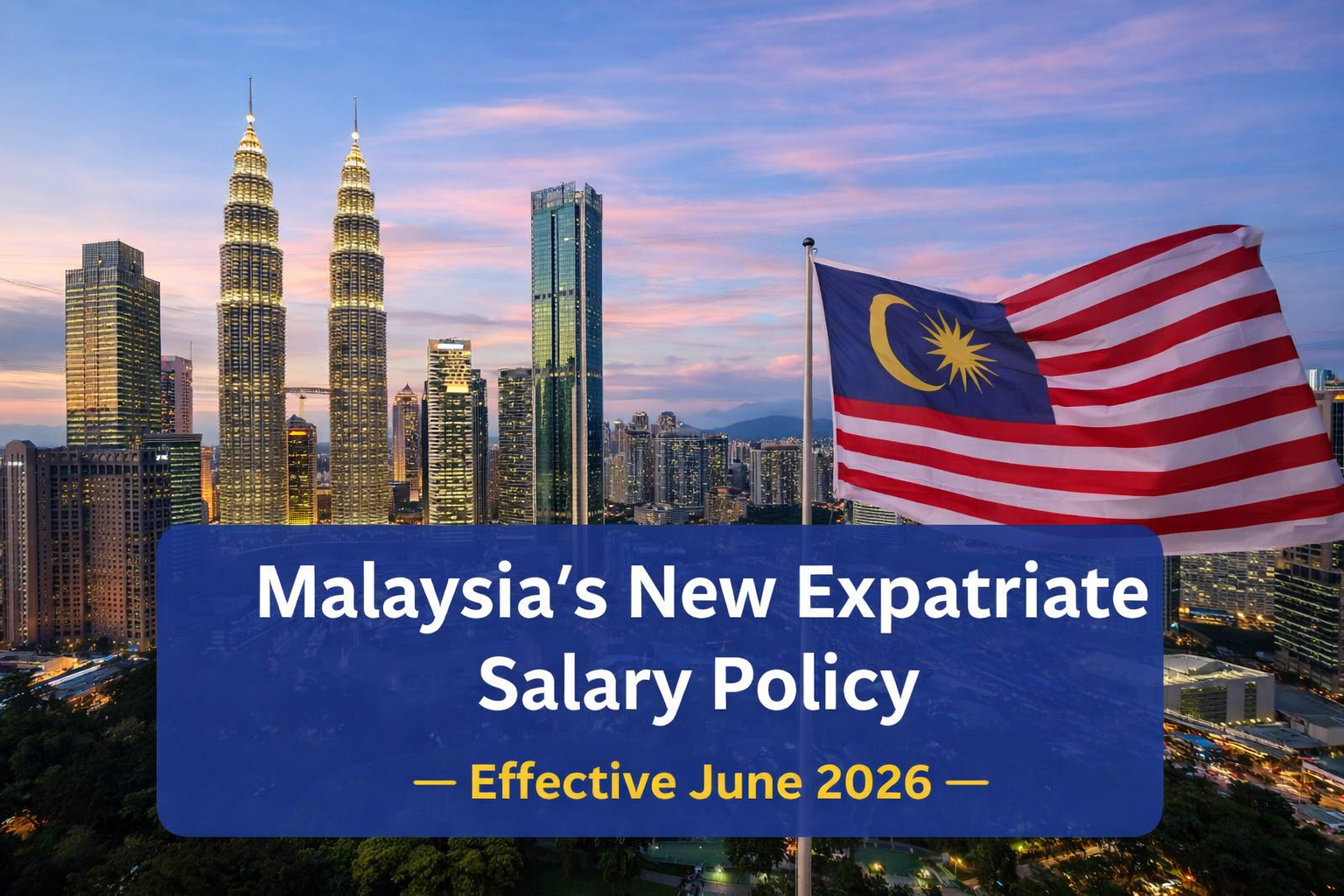
If you’re thinking about working in Malaysia, moving here with your family, or even setting up a business that hires foreign professionals, you may have seen recent news about a new expatriate salary policy starting on 1 June 2026.
At first glance, policy announcements can feel distant or confusing. But this one matters. It affects how expatriates are hired, how much they are paid, and how companies plan their workforce in the coming years.
So let’s talk about it calmly and clearly — like a conversation with someone who’s genuinely considering Malaysia as their next step.
Why Malaysia Is Updating Its Expatriate Salary Policy
Malaysia has always tried to balance two important goals. One is attracting foreign investment and international talent. The other is protecting opportunities for local professionals and making sure wage growth is fair.
This new policy is part of that balance.
The government has made it clear that Malaysia still wants to be a business-friendly country. At the same time, it wants development to be sustainable and inclusive, with proper priority given to local talent.
For businesses setting up operations here, this ties closely with how companies are structured and managed. If you’re unfamiliar with how companies are formed or governed, it’s worth understanding the basics of company setup in Malaysia early, especially if expatriates are part of your plan.
When Does the New Policy Start?
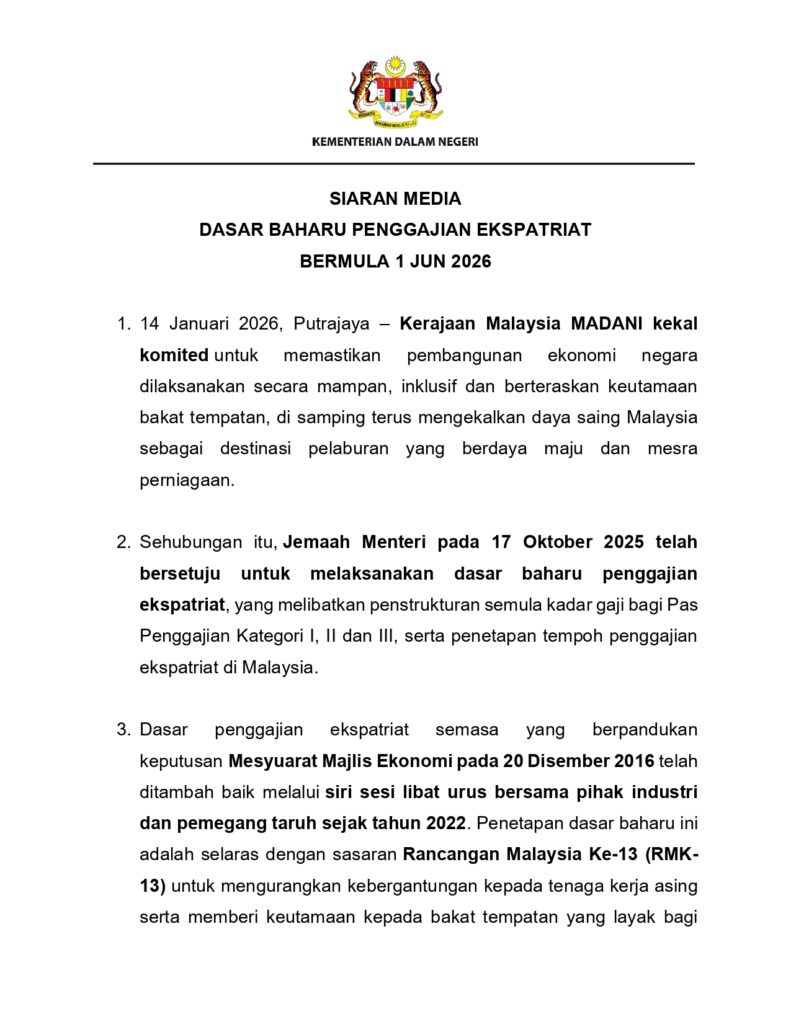
The new expatriate salary policy will officially begin on 1 June 2026.
This transition period gives employers and individuals time to prepare. If you’re already working in Malaysia or planning to relocate in the near future, this window is important. It allows time to review employment terms, salary structures, and compliance requirements before the new rules fully apply.
What Is Actually Changing?
The key change is the restructuring of salary requirements under different Employment Pass categories — usually known as Category I, II, and III.
Under the new framework:
- Salary thresholds will be reviewed and adjusted
- The duration of expatriate employment may be more clearly defined
- Employers will need to better justify why an expatriate role is required
This affects not just hiring, but also how companies maintain proper records and filings. Many of these responsibilities fall under company secretarial services, which ensure that appointments, compliance, and statutory records remain in order.
What This Means for Expatriates Planning to Work in Malaysia
If you’re a foreign professional considering Malaysia, this policy does not mean the door is closing.
What it does mean is:
- Salaries will need to match skills and responsibilities more clearly
- Employers may be more selective and prepared before making offers
- Documentation and compliance will matter more than before
Professionals with specialised skills, leadership experience, or regional expertise are still very much in demand. Clearer rules often make the process smoother, because expectations are set upfront.
If you’re unsure which employment category applies to you, or how the pass application works, it helps to understand the immigration and employment pass process in Malaysia before accepting any offer.
What About Businesses Hiring Expatriates?
For Malaysian companies and foreign-owned businesses, this policy is a signal to plan early rather than react late.
Businesses may need to:
- Review salary structures
- Clearly define expatriate roles
- Ensure directors and secretaries are properly appointed
- Align hiring with long-term workforce planning
This is where having proper company secretarial support becomes important, especially for handling director appointments, statutory filings, and compliance with local regulations.
How This Affects Foreign Investors and Entrepreneurs
If you’re planning to start a business in Malaysia — whether as a foreign founder, investor, or regional manager — this policy should be part of your planning, not a reason to hesitate.
Malaysia remains attractive because of its infrastructure, location, and stable business environment. However, bringing in foreign directors or management now requires clearer structuring and documentation.
Foreign founders often combine company incorporation, immigration planning, and ongoing compliance from the start to avoid issues later.
Why the Government Is Doing This Now
This policy is not sudden. It builds on years of discussions with industries and stakeholders and aligns with Malaysia’s long-term development plans.
The focus is on reducing over-reliance on foreign labour while ensuring local professionals are trained, retained, and fairly compensated.
From a broader perspective, it’s about stability — for businesses, workers, and the economy.
What Should You Do Next?
If you are:
- An expatriate already working in Malaysia
- Planning to migrate for work
- Running a business that hires foreign professionals
Now is the right time to prepare calmly and properly.
You may want to:
- Review employment contracts and salary structures
- Understand which Employment Pass category applies
- Get advice on company setup, secretarial compliance, and immigration matters
Being informed early always saves time and stress later.
A Simple Takeaway
Malaysia is not closing its doors. It is refining how things are managed.
For people who genuinely want to work, invest, or build a life here, Malaysia remains welcoming. The process may become more structured, but clarity is better than uncertainty.
If Malaysia is part of your future, understanding this new expatriate salary policy is simply part of being prepared.
Reference: Malaysia’s New Expatriate Salary Policy 2026
FAQs – Malaysia’s New Expatriate Salary Policy
Q1: When will the new expatriate salary policy start in Malaysia?
The new expatriate salary policy will take effect on 1 June 2026. Employers and expatriates are encouraged to prepare early to ensure compliance.
Q2: Who does the expatriate salary policy apply to?
The policy applies to foreign nationals working in Malaysia under Employment Pass categories, including Category I, II, and III.
Q3: Will expatriates still be able to work in Malaysia after 2026?
Yes. Malaysia remains open to expatriates, especially those with specialised skills or senior-level experience. The policy aims to create clearer and fairer hiring standards.
Q4: How will this policy affect Employment Pass applications?
Salary thresholds and employment durations may be revised. Employers may need stronger justification when applying for Employment Passes for expatriate roles.
Q5: Does this affect foreign business owners in Malaysia?
Yes. Foreign founders and investors who hold Employment Passes or hire expatriates should review company structure, salary planning, and immigration compliance early.
Q6: What should employers do to prepare for the new policy?
Employers should review employment contracts, salary structures, company secretarial records, and immigration documentation well before June 2026.
Q7: Is professional advice recommended for expatriate hiring in Malaysia?
Yes. Professional guidance helps ensure compliance with company setup, secretarial requirements, and immigration regulations, especially during policy transitions.