e-Invoice Malaysia Implementation: What Businesses Need to Know About LHDN & MyInvois
If you’ve been hearing more about mandatory e-invoicing lately, you’re not alone. Many SMEs and growing companies are trying to understand what changes in daily operations, what needs to be updated in their billing process, and how to avoid compliance issues down the road. The reality is that this rollout is not just about generating a new invoice format—it’s about aligning how transaction data is captured, validated, and reported.
This guide breaks down e-Invoice Malaysia implementation in a practical way, with a focus on how LHDN and the MyInvois platform fit together. By the end, you should have a clearer view of what e-Invoice Malaysia implementation means for your business and what to prepare before it becomes part of your regular workflow.
What Is e-Invoice in Malaysia?
An e-invoice is a digitally structured invoice that can be validated and recorded in a standard format. In the Malaysian context, the objective is to improve transaction transparency and strengthen digital reporting. That’s why e-Invoice Malaysia implementation is not limited to a single industry—it affects how invoices, credit notes, debit notes, and related documents are created and tracked.
The key difference is that the data structure matters. Instead of only producing a PDF for your customer, the invoice data is prepared in a format that supports validation and recordkeeping across systems. For many businesses, this means reviewing how invoice fields are captured, how customer details are stored, and how line items are recorded.
Overview of LHDN e-Invoice Requirements
LHDN’s e-invoicing initiative sets the compliance expectations for how invoice information is submitted, validated, and stored. The exact operational details can vary by business size and transaction volume, but the direction is clear: invoices must be generated with accurate taxpayer details, consistent transaction data, and proper documentation trails.
If you want to follow updates directly from HASiL, the official e-invoice resource page is a good place to start: LHDN e-Invoice (HASiL official). For many companies, the first challenge is not the concept—it’s getting the internal data clean enough to pass validation consistently. :contentReference[oaicite:1]{index=1}
Understanding MyInvois and How It Works
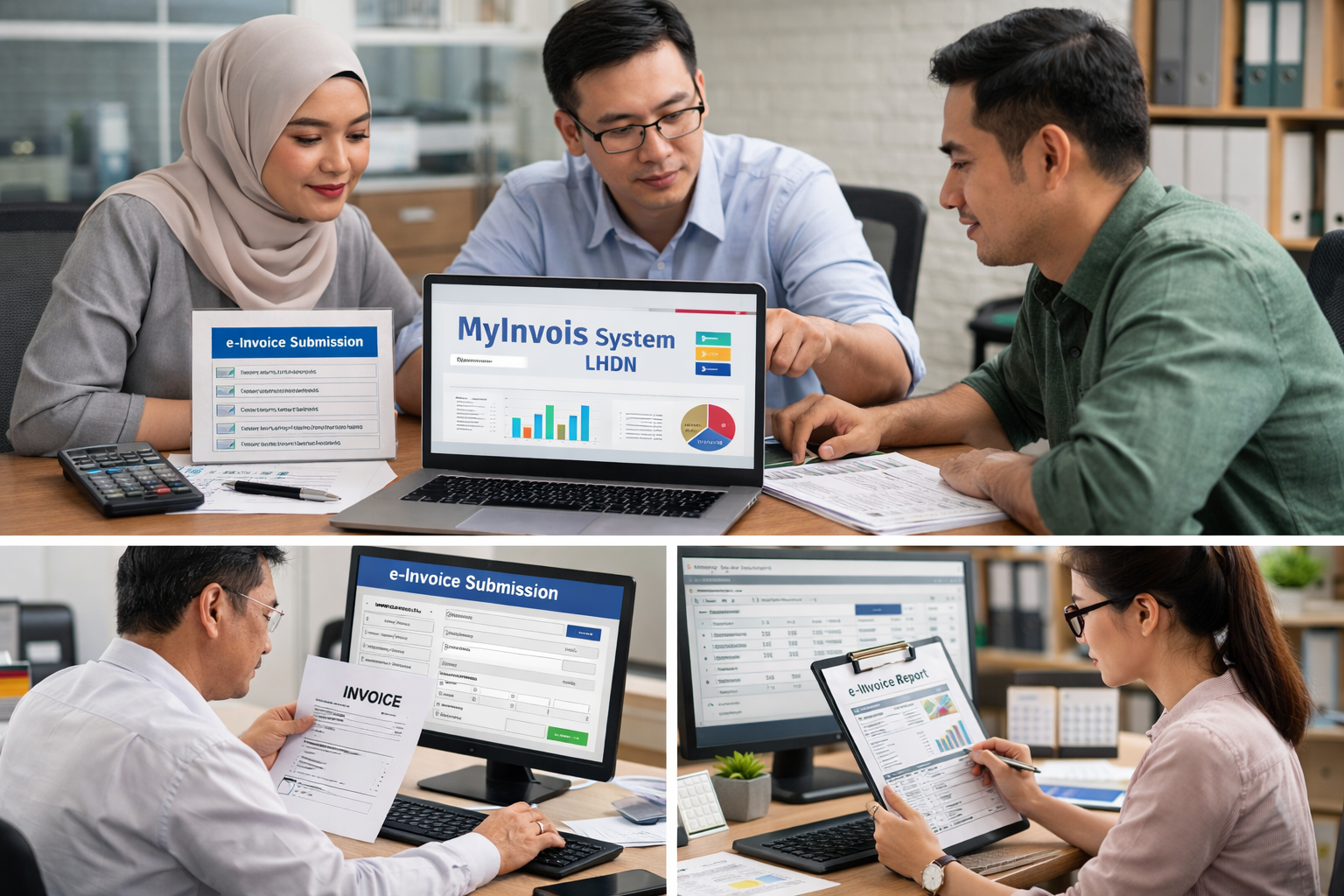
The MyInvois system is the platform provided by HASiL to support e-invoicing workflows. It’s designed to help businesses issue and manage e-invoices without needing complex enterprise systems, especially for companies that rely on manual invoicing or basic accounting tools.
HASiL provides official information about the portal here: MyInvois Portal (HASiL official). Understanding what the portal can do—and what your internal process must supply—helps reduce trial-and-error during rollout. :contentReference[oaicite:2]{index=2}
Who Needs to Implement e-Invoice in Malaysia?
A common misconception is that only large corporations need to care. In practice, e-Invoice Malaysia implementation is structured to be rolled out in phases, but SMEs, service providers, and even lean teams will eventually need a workable approach. If your business issues invoices to customers, you should expect your invoicing data and workflow to be part of the compliance picture.
This becomes especially relevant for companies that operate across multiple branches, run high-volume transactions, or manage mixed billing methods (manual invoices, POS invoices, online payments). Even if you outsource finance tasks, your internal data discipline still matters, because invoice content comes from your operations.
e-Invoice Implementation Timeline (High-Level)
Most businesses don’t need a timeline memorized—they need a plan tied to readiness. The most practical way to approach e-Invoice Malaysia implementation is to track updates from HASiL/LHDN and prepare your invoicing workflow early, even if your enforcement date is not immediate.
If your current invoicing is inconsistent (customer details missing, items not standardized, invoices generated in different formats), that’s the gap to close first. A few weeks of cleanup can save months of operational friction once you are required to submit structured invoice data.
How e-Invoice Affects Daily Business Operations
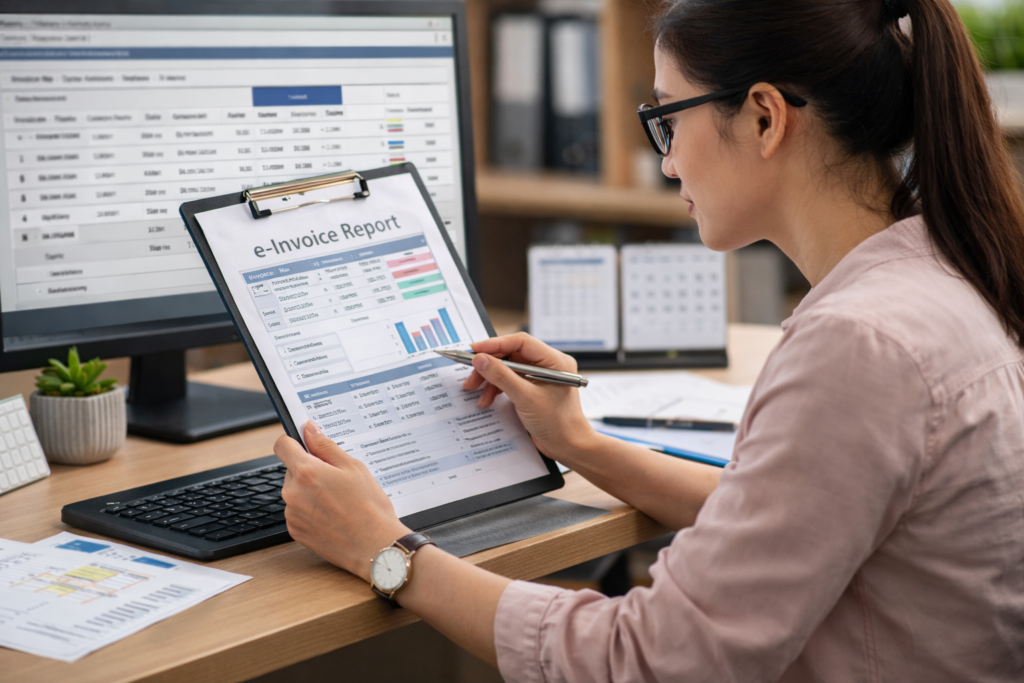
This change shows up in the small routines. Sales teams must capture correct buyer details. Operations must ensure products and services are categorized consistently. Finance must ensure invoice numbering, dates, totals, and adjustments follow a reliable logic. When e-Invoice Malaysia implementation becomes the standard, “close enough” invoice data stops being acceptable.
For many SMEs, the biggest operational shift is documentation discipline. Credit notes and corrections must be properly recorded. Refund scenarios need a consistent method. Even if the front-end looks the same to the customer, the back-end data must be structured and auditable.
Common Challenges Businesses Face
Most issues are predictable. The first is messy master data—customer names vary, addresses are incomplete, taxpayer information is missing, and product naming is inconsistent. The second is workflow fragmentation: invoices are issued from multiple places (WhatsApp quotes, spreadsheets, POS systems, and accounting software), which creates data mismatches.
Another common issue is role clarity. Who validates customer details? Who owns the invoice template and line item structure? Who handles adjustments? If you don’t define ownership, e-Invoice Malaysia implementation can become a daily firefight instead of a controlled process.
Preparing Your Business for e-Invoice Compliance
Start with your current invoicing reality. Review the invoices you issued in the last 30–60 days. Are customer details complete? Are line items consistent? Are tax fields handled properly? These checks are not busywork—they are the foundation for compliance.
Next, decide how you will operate. Some businesses will rely more on portal-based workflows, while others will integrate with accounting systems. Either way, e-Invoice Malaysia implementation works best when your accounting and tax compliance processes are aligned. If you want help structuring your finance operations, you can connect this topic to related support such as Accounting & Bookkeeping Services and Tax Compliance Services.
For newly incorporated companies, make sure your statutory and tax setup is correct early. This includes foundational registrations like Income Tax Number Registration with LHDN and ongoing governance support through Company Secretarial Services. Clean setup reduces friction when e-invoicing becomes a routine obligation.
What Happens If Businesses Are Not Ready?
If the business is not ready, the problem usually isn’t one big failure. It’s repeated small failures: invoices rejected due to incorrect details, delays in issuing invoices, customers chasing documents, finance teams stuck correcting data, and leadership losing visibility over actual revenue records.
The goal is not perfection—it’s control. Treat e-Invoice Malaysia implementation like a structured compliance project: clarify your workflow, clean your data, assign responsibilities, and choose a method that fits your transaction volume. When the process is stable, the compliance side becomes far less stressful.
If you’ve been hearing more about mandatory e-invoicing lately, you’re not alone. Many SMEs and growing companies are trying to understand what changes in daily operations, what needs to be updated in their billing process, and how to avoid compliance issues down the road. The reality is that this rollout is not just about generating a new invoice format—it’s about aligning how transaction data is captured, validated, and reported.
This guide breaks down e-Invoice Malaysia implementation in a practical way, with a focus on how LHDN and the MyInvois platform fit together. By the end, you should have a clearer view of what e-Invoice Malaysia implementation means for your business and what to prepare before it becomes part of your regular workflow.
What Is e-Invoice in Malaysia?
An e-invoice is a digitally structured invoice that can be validated and recorded in a standard format. In the Malaysian context, the objective is to improve transaction transparency and strengthen digital reporting. That’s why e-Invoice Malaysia implementation is not limited to a single industry—it affects how invoices, credit notes, debit notes, and related documents are created and tracked.
The key difference is that the data structure matters. Instead of only producing a PDF for your customer, the invoice data is prepared in a format that supports validation and recordkeeping across systems. For many businesses, this means reviewing how invoice fields are captured, how customer details are stored, and how line items are recorded.
Overview of LHDN e-Invoice Requirements
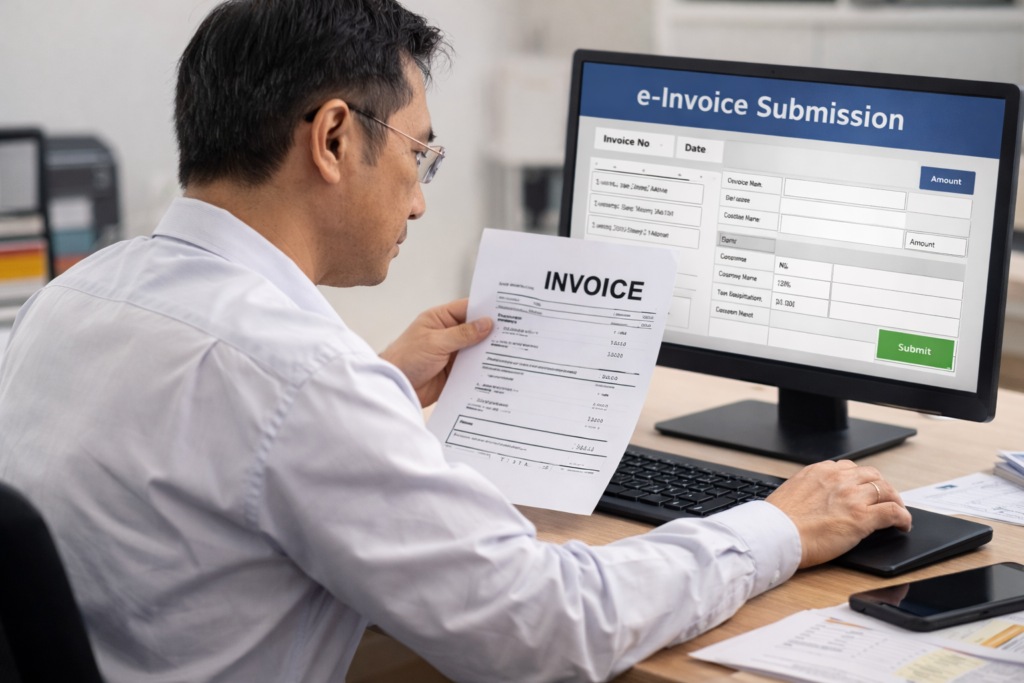
LHDN’s e-invoicing initiative sets the compliance expectations for how invoice information is submitted, validated, and stored. The exact operational details can vary by business size and transaction volume, but the direction is clear: invoices must be generated with accurate taxpayer details, consistent transaction data, and proper documentation trails.
If you want to follow updates directly from HASiL, the official e-invoice resource page is a good place to start: LHDN e-Invoice (HASiL official). For many companies, the first challenge is not the concept—it’s getting the internal data clean enough to pass validation consistently. :contentReference[oaicite:1]{index=1}
Understanding MyInvois and How It Works
The MyInvois system is the platform provided by HASiL to support e-invoicing workflows. It’s designed to help businesses issue and manage e-invoices without needing complex enterprise systems, especially for companies that rely on manual invoicing or basic accounting tools.
HASiL provides official information about the portal here: MyInvois Portal (HASiL official). Understanding what the portal can do—and what your internal process must supply—helps reduce trial-and-error during rollout. :contentReference[oaicite:2]{index=2}
Who Needs to Implement e-Invoice in Malaysia?
A common misconception is that only large corporations need to care. In practice, e-Invoice Malaysia implementation is structured to be rolled out in phases, but SMEs, service providers, and even lean teams will eventually need a workable approach. If your business issues invoices to customers, you should expect your invoicing data and workflow to be part of the compliance picture.
This becomes especially relevant for companies that operate across multiple branches, run high-volume transactions, or manage mixed billing methods (manual invoices, POS invoices, online payments). Even if you outsource finance tasks, your internal data discipline still matters, because invoice content comes from your operations.
e-Invoice Implementation Timeline (High-Level)
Most businesses don’t need a timeline memorized—they need a plan tied to readiness. The most practical way to approach e-Invoice Malaysia implementation is to track updates from HASiL/LHDN and prepare your invoicing workflow early, even if your enforcement date is not immediate.
If your current invoicing is inconsistent (customer details missing, items not standardized, invoices generated in different formats), that’s the gap to close first. A few weeks of cleanup can save months of operational friction once you are required to submit structured invoice data.
How e-Invoice Affects Daily Business Operations
This change shows up in the small routines. Sales teams must capture correct buyer details. Operations must ensure products and services are categorized consistently. Finance must ensure invoice numbering, dates, totals, and adjustments follow a reliable logic. When e-Invoice Malaysia implementation becomes the standard, “close enough” invoice data stops being acceptable.
For many SMEs, the biggest operational shift is documentation discipline. Credit notes and corrections must be properly recorded. Refund scenarios need a consistent method. Even if the front-end looks the same to the customer, the back-end data must be structured and auditable.
Common Challenges Businesses Face
Most issues are predictable. The first is messy master data—customer names vary, addresses are incomplete, taxpayer information is missing, and product naming is inconsistent. The second is workflow fragmentation: invoices are issued from multiple places (WhatsApp quotes, spreadsheets, POS systems, and accounting software), which creates data mismatches.
Another common issue is role clarity. Who validates customer details? Who owns the invoice template and line item structure? Who handles adjustments? If you don’t define ownership, e-Invoice Malaysia implementation can become a daily firefight instead of a controlled process.
Preparing Your Business for e-Invoice Compliance
Start with your current invoicing reality. Review the invoices you issued in the last 30–60 days. Are customer details complete? Are line items consistent? Are tax fields handled properly? These checks are not busywork—they are the foundation for compliance.
Next, decide how you will operate. Some businesses will rely more on portal-based workflows, while others will integrate with accounting systems. Either way, e-Invoice Malaysia implementation works best when your accounting and tax compliance processes are aligned. If you want help structuring your finance operations, you can connect this topic to related support such as Accounting & Bookkeeping Services and Tax Compliance Services.
For newly incorporated companies, make sure your statutory and tax setup is correct early. This includes foundational registrations like Income Tax Number Registration with LHDN and ongoing governance support through Company Secretarial Services. Clean setup reduces friction when e-invoicing becomes a routine obligation.
What Happens If Businesses Are Not Ready?
If the business is not ready, the problem usually isn’t one big failure. It’s repeated small failures: invoices rejected due to incorrect details, delays in issuing invoices, customers chasing documents, finance teams stuck correcting data, and leadership losing visibility over actual revenue records.
The goal is not perfection—it’s control. Treat e-Invoice Malaysia implementation like a structured compliance project: clarify your workflow, clean your data, assign responsibilities, and choose a method that fits your transaction volume. When the process is stable, the compliance side becomes far less stressful.