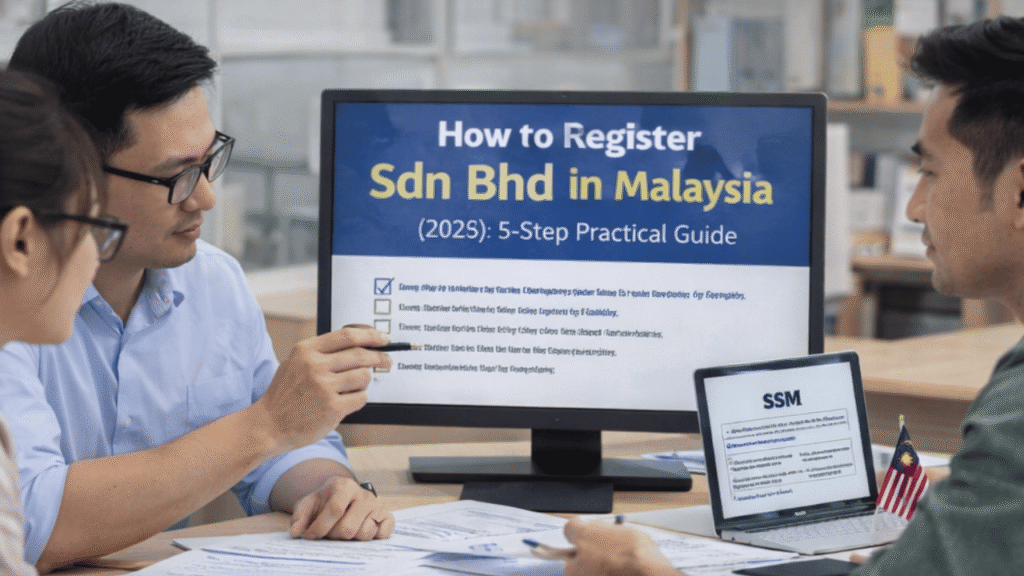

How to Register Sdn Bhd in Malaysia (2026): A Clear 5-Step Guide
Registering a Sdn Bhd in Malaysia is a structured legal process, but for many founders, it still feels unclear. Questions about documents, timelines, ownership rules, and compliance often come up before the first form is even submitted.
This guide explains how to register Sdn Bhd in Malaysia using a clear, practical, and compliant approach. It focuses on what actually happens, what documents are required, and how businesses can move through the process smoothly in 2026 without unnecessary delays.
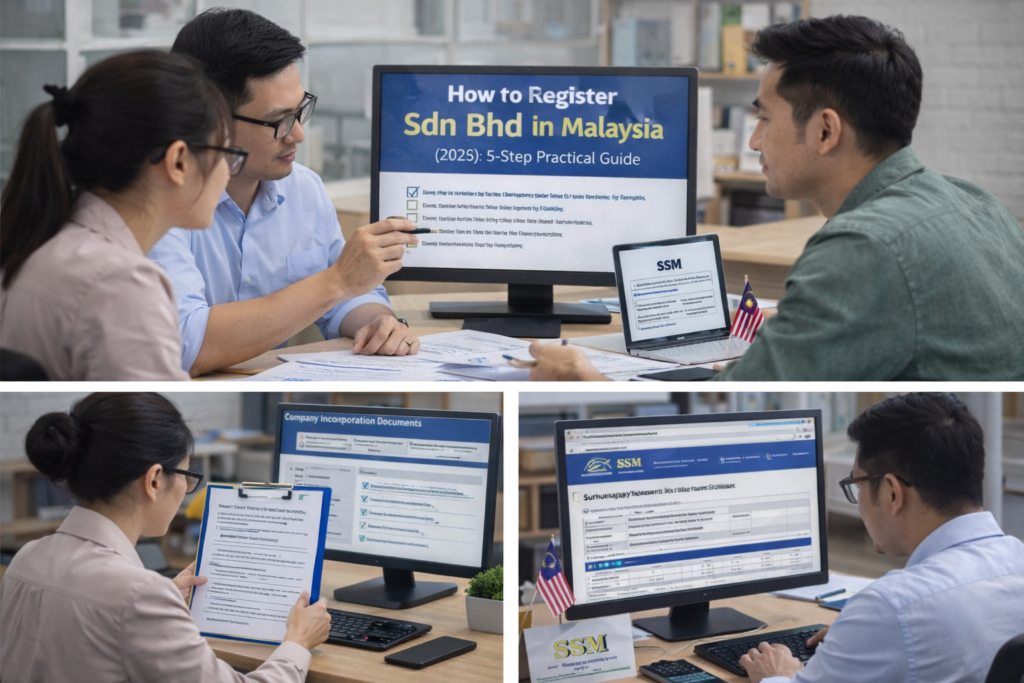
What Is a Sdn Bhd in Malaysia? and How to Register Sdn Bhd?
A Sdn Bhd, or Sendirian Berhad, is a private limited company registered under the Companies Act 2016. It is a separate legal entity, meaning the company exists independently from its shareholders and directors.
This structure is commonly used by SMEs, startups, foreign-owned companies, and growing businesses because it supports ownership flexibility, limited liability, and long-term scalability. Understanding this foundation helps businesses decide whether Sdn Bhd is the right structure before starting the registration process.
Step 1: Company Name Search and Reservation
The first step is conducting a company name search with Suruhanjaya Syarikat Malaysia (SSM). The proposed name must follow SSM naming guidelines and must not be identical or misleadingly similar to existing companies.
A structured name search reduces the risk of rejection and prevents delays later. Once approved, the name is reserved temporarily, allowing the incorporation process to proceed. This step may seem simple, but rejected names are one of the most common causes of registration delays.
Step 2: Prepare Incorporation Information and Documents
Before submission, companies must prepare key incorporation details. These include shareholder information, director particulars, registered office address, and business activity descriptions.
Supporting documents such as identity verification, consent forms, and statutory declarations must be accurate and consistent. A documented and verified preparation stage ensures the application is complete and compliant before submission to SSM.
Step 3: Submit Incorporation Application to SSM
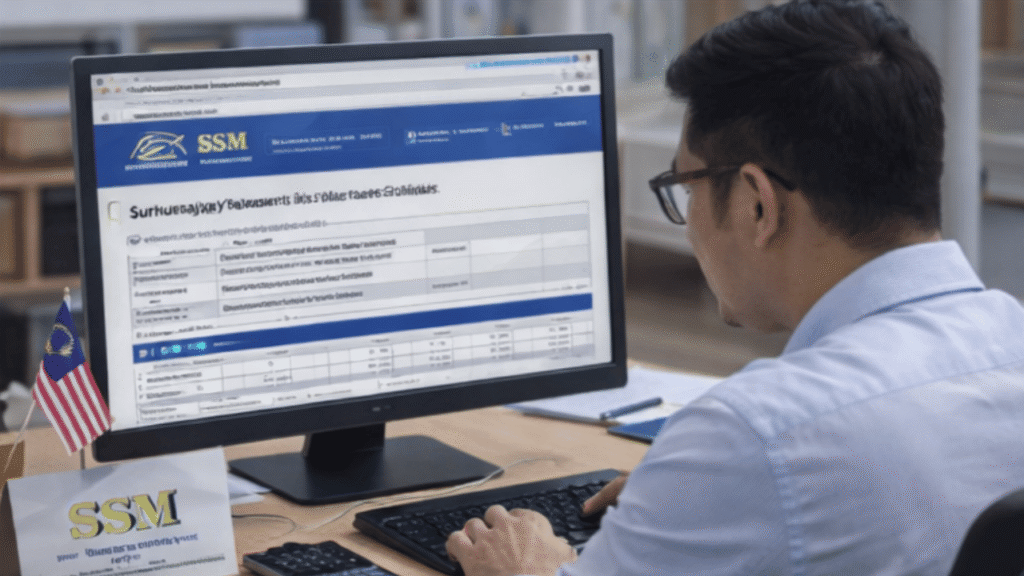
Once documents are ready, the incorporation application is submitted electronically through SSM’s system. At this stage, accuracy matters. Any mismatch in details may trigger queries or rejection.
When submitted correctly, the application is reviewed by SSM. Processing timelines can vary, but most complete submissions move forward without issue. Businesses benefit from a structured submission approach that reduces unnecessary back-and-forth.
Step 4: Receive Certificate of Incorporation
Upon approval, SSM issues the Notice of Registration, confirming that the Sdn Bhd is legally incorporated. From this point, the company exists as a registered legal entity in Malaysia.
This milestone allows the business to proceed with operational steps such as opening a corporate bank account, signing contracts, and registering for tax. Official company information can also be verified through SSM’s public records.
Step 5: Complete Post-Incorporation Compliance
Incorporation is not the final step. Newly registered Sdn Bhd companies must complete post-registration obligations, including income tax number registration, appointment of a company secretary, and maintenance of statutory records.
Many companies align this stage with Company Secretarial Services and Income Tax Number Registration with LHDN to ensure compliance remains consistent and auditable from day one.
Documents Required to Register Sdn Bhd
While document requirements vary slightly depending on ownership structure, most Sdn Bhd registrations require identification documents for directors and shareholders, registered office details, and incorporation declarations.
Foreign-owned companies may require additional supporting documents. Preparing documents early and keeping records clear and traceable helps avoid delays during submission and review.
How Long Does Sdn Bhd Registration Take in Malaysia?
When documentation is complete and accurate, Sdn Bhd registration can be completed relatively quickly. Delays usually occur due to name rejection, incomplete documents, or incorrect information.
Businesses that follow a step-by-step and compliant process generally experience fewer interruptions. Planning incorporation alongside tax and compliance setup further reduces post-registration friction.